asphalt-photos-09

Paving and Base Prep: Customer Responsibilities

Before we arrive

  • Turn off sprinklers and other water sources the night before your project is scheduled so that the area is clean and dry when the crew arrives.
  • Reschedule deliveries, pickups and anyone who may be planning to come to the property. Notify all affected parties.
  • Please notify your estimator if there is a specific place or way you would like our crews and equipment to access the project. You are responsible to provide adequate access for heavy equipment to the site. Damage caused to access points during construction is the customer's responsibility.
  • Private utilities are not typically marked by Bluestakes. You are responsible for marking, relocating, and/ or repairing any private utilities damaged, as well as any landscape restoration.
  • Remove all encumbrances at least 50 feet from the work area, including dumpsters, vehicles, flower pots, down spouts, trailers, etc.
  • If the crew is impeded in their work, standby or remobilization charges will apply.
  • If we did not prep the base, and we encounter issues while paving, additional charges may apply. A competent party should inspect and prepare the base for paving.

During: What happens on Paving Day

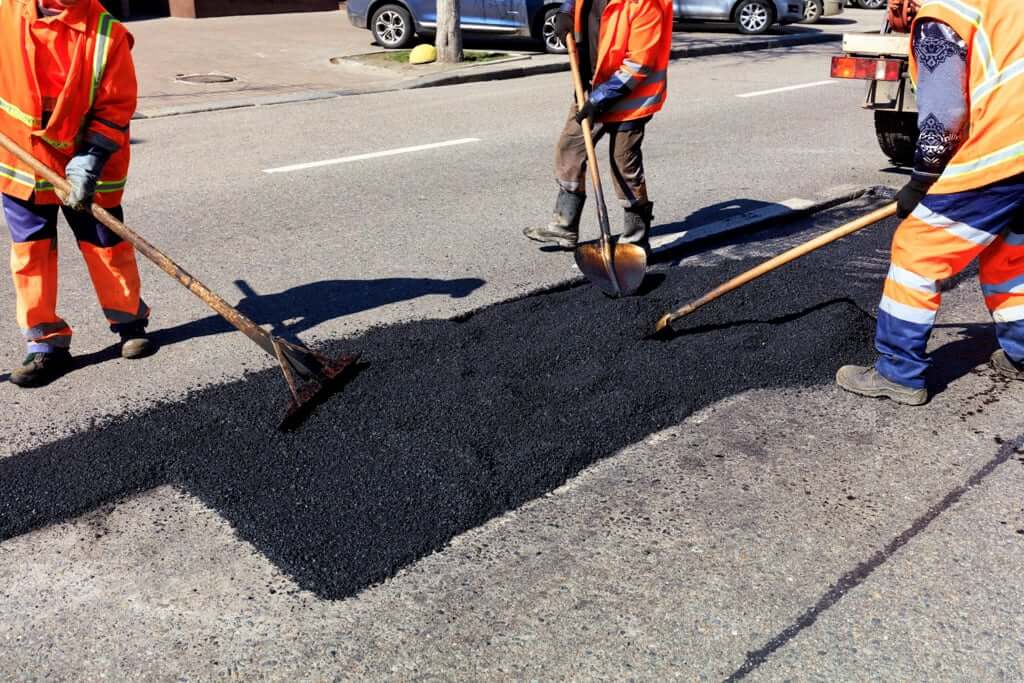
  • Paving involves compacting the base layer, laying hot mix asphalt, and rolling it smooth. This involves dump trucks, excavators, paving machines, rollers, and other heavy equipment. If base material is not adequate, existing material may need to be removed, and new road base installed.
  • Compacting asphalt requires a vibrating steel drum roller that weighs multiple tons. As such, damage to adjacent concrete or structures is possible. Restoration of these items is the responsibility of the customer. It is highly recommended that adjacent concrete be at least 30 days old before paving.
  • We love having our customers with us as we work on their project, so we are sure to meet their expectations. However, if you can’t be there, don’t worry, we will do a great job!

After: Caring for your new asphalt

  • Regular traffic is typically kept off overnight. Even then, full cure takes several months, and pavement is soft and susceptible to damage during that time. Care should be taken to avoid scuffing, scraping, or placing heavy items with a small footprint until fully cured. Do not park trailers, vehicles or place anything heavy, particularly with a high PSI, on your pavement for at least 30 days. Your asphalt starts soft and gets harder as it cures over time. Construction activities are often hard on new pavements and should be avoided. Asphalt will soften in high heat, you should avoid long term parking in hot months.
  • Keeping asphalt clean is important for long term service life. Rocks, sand and debris will scrub at the surface under traffic and wear the surface prematurely. Dirt will hold moisture longer than normal on the surface which can make the asphalt soft.
  • Have a sealcoat done 6-12 months after new asphalt is laid. Sealing your asphalt, especially early in its life cycle, will extend the service life by 100% to 200%, assuming appropriate traffic loads. In order to maintain the warranty on your new asphalt, it must be sealed within 12 months of installation.
  • Avoid letting gas, diesel, oil, and other harmful substances on the asphalt.
  • Control and kill weeds and other vegetation in and around your asphalt to prevent it from growing through. The importance of this cannot be overstated. Once weeds begin growing through, it is difficult to get under control.
  • When cracks reach a minimum of ¼ inch wide and deep, it’s time to look at sealing them. Additional info can be found in our “Crack seal” page.
  • Landscape restoration and edge backfill are generally the customer’s responsibility unless specifically included in the quote
After appropriate timeframe, customer is responsible to remove barricades.

Want more info on the base prep and paving process?

Check out our base prep and paving service page HERE.