aspahlt-patching

Asphalt Patching

Customer Responsibilities

  • Turn off sprinklers and other water sources the night before your project is scheduled so that the area is clean and dry when the crew arrives.
  • Reschedule deliveries, pickups and anyone who may be planning to come to the property. Notify all affected parties.
  • You are responsible to provide adequate access for heavy equipment to the site. Damage caused to access points during construction is the customer's responsibility.
  • Remove all encumbrances at least 10 feet from the work area, including dumpsters, vehicles, flower pots, down spouts, trailers, etc. The entire area doesn't need to be cleared, just the areas directly on and around the areas to be patched.
  • If the crew is impeded in their work, standby or remobilization charges will apply.

After Care

  • You can gently drive across the pavement, without stopping, after 12 hours. Do not park trailers, vehicles or place anything heavy, particularly with a high PSI, on your pavement for 30 days. Your asphalt starts soft and gets harder as it cures.
  • Avoid dripping gas, diesel, oil, and other harmful substances on the asphalt.
  • Sealing around patches a year or two after installation can sometimes help them last longer. However, when the pavement around the patch is close to the end of its lifecycle, the return on the investment of a sealer is low. When cracks reach a minimum of ¼ inch wide and deep, it may be time to look at sealing them.
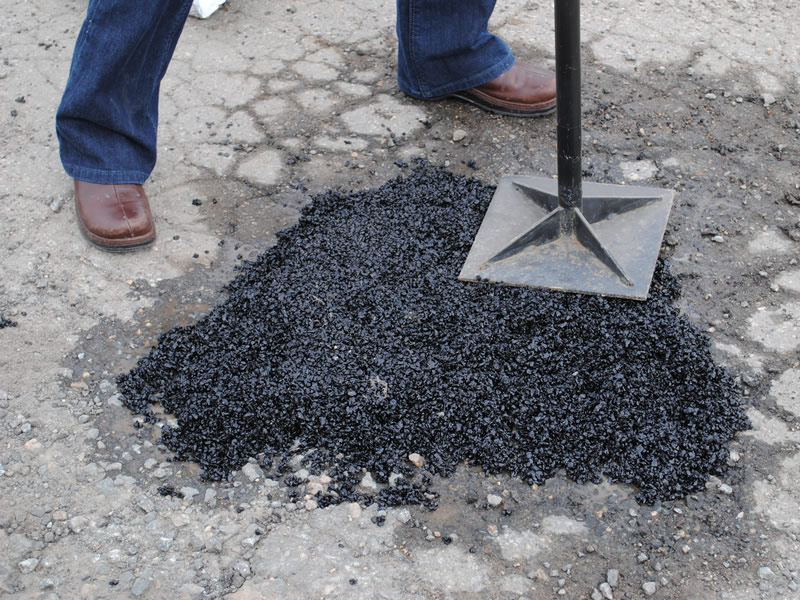
  • Be aware, patches are often installed slightly proud or crowned to encourage water runoff and help account for settling.

After appropriate timeframe, remove any barricades and enjoy your new patches! Throw away disposable barricade materials and set aside cones for Top Job to pick up, when applicable.

The Top Job Difference

  • Asphalt patching requires meticulous adherence to a proven process to ensure the best results.