asphalt-photos-09

Paving and Base Prep: What to Expect

What base prep usually involves

  • Existing material may be excavated and removed on or off site
  • Existing material may include native soil, gravel, failed asphalt, or unsuitable base
  • New road base may be brought in, graded, and compacted to create a stable foundation
  • If unexpected conditions are encountered during excavation or compaction—such as soft spots, structures, hard rock, pipes, concrete, or other obstructions—additional work and charges may be required

What customers should expect during base prep

  • Heavy equipment may include dump trucks, skid steers, excavators, rollers, and other support equipment
  • Equipment moving through and around the project area can create dust
  • Adjacent grass, landscaping, sprinkler components, concrete edges, and other nearby improvements can sometimes be affected
  • We do our best to mitigate damage, but some impact is not always avoidable
  • Landscape restoration and edge backfill are generally the customer’s responsibility unless specifically included in the quote

Timeline expectations for base prep

  • Small residential projects may be prepped in a few hours
  • Larger projects such as parking lots, roads, or subdivisions may take days or even weeks
  • Base prep and paving are often completed on different days
  • It is common for the prep crew to finish first, with the paving crew returning later

Can customers drive on the prepared surface?

  • Yes, compacted road base can usually be driven on without issue
  • This is important because there may be a gap between prep day and paving day

What paving usually involves

  • Asphalt is typically placed with a large asphalt paver
  • The paver is fed by dump trucks and can place asphalt very quickly
  • Customers are often surprised by how fast paving moves once it begins
  • After placement, the asphalt is compacted with a vibratory roller or other compaction equipment to achieve the density required for a quality driving surface
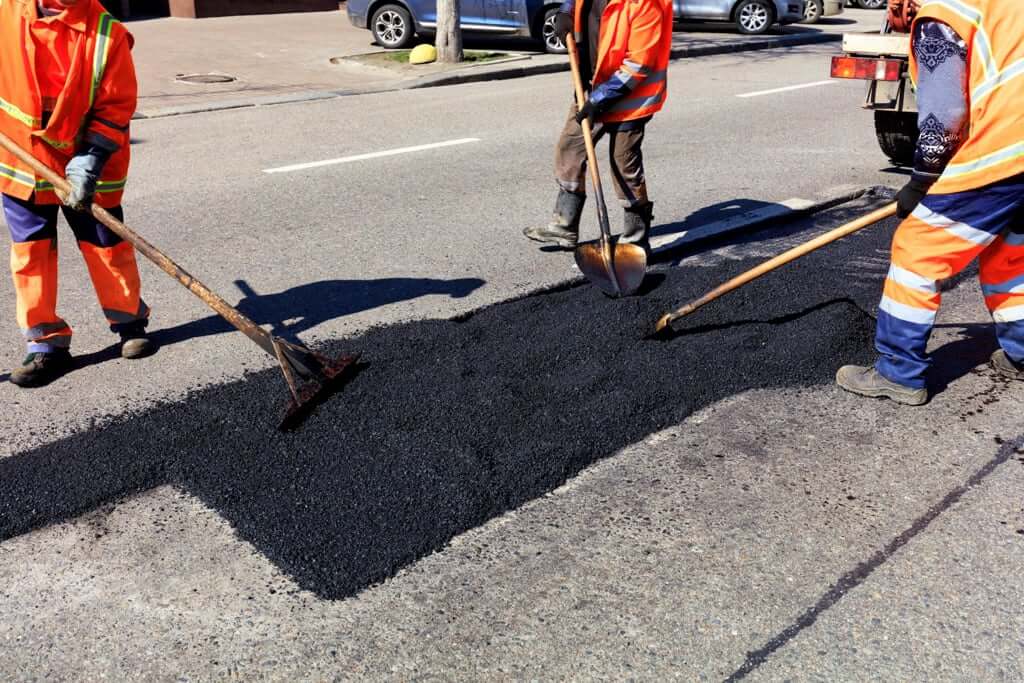
  • Near buildings, rock walls, siding, curbs, or delicate adjacent surfaces, asphalt may be placed by hand or skid steer and compacted with smaller equipment to reduce the risk of damage

Working near buildings and concrete

  • Because paving equipment is large and heavy, we try to avoid bringing it too close to buildings and adjacent concrete when possible
  • When paving near structures, crews may switch to smaller equipment or hand work
  • New concrete is especially vulnerable to chipping
  • Recommend a minimum of 4 weeks between pouring new concrete and paving next to it

What happens after paving

  • Do not drive on newly paved asphalt for 24 hours after the crew leaves
  • Do not park on the new asphalt for 2 weeks if possible
  • Asphalt can remain soft while curing and may indent if vehicles sit on it too soon
  • Absolutely no heavy vehicles on the new asphalt for the first 6 months, including large tractors, loaded dump trucks, trailers, or similar heavy equipment
  • Asphalt can take up to 6 months to fully cure
  • New asphalt should be sealed roughly 3 to 12 months after installation

Conclusion

  • This list may seem overwhelming, it’s really not that big of a deal
  • This is an exhaustive list, trying to cover every scenario
  • Most customers won't even read this, and do just fine
  • If you have any questions or concerns, please let us know